I Was "Monitoring" 25+ Instagram Pages. I Was Just Wasting Time.
How I built an Instagram story monitoring dashboard with spacing alerts and automated hourly email reports using Claude Code. No engineers involved.
Every morning, the routine was the same.
Open Instagram. Check page one. Stories posted? Good. Check page two. Stories? Yes. Check page three…
Twenty-five pages later, thirty minutes had passed. And I hadn’t done anything useful. I’d just confirmed that things existed.
That’s not monitoring. That’s just time disappearing.
This post covers how to monitor Instagram story activity across 25+ pages without opening the app — including how to catch story spacing violations that quietly hurt reach, how to build an internal story dashboard, and how to set up automated hourly email reports. Built entirely with Claude Code by someone running content operations, not engineering.
The problem I didn’t know I had
When you’re managing 25+ pages, there’s an issue that doesn’t show up anywhere: it’s not whether you post stories. It’s when.
Stories posted too close together don’t get distributed the way you’d expect. The algorithm sees a burst, not a cadence. Reach drops. Views thin out. And because you can’t manually track gaps across that many pages, it just keeps happening quietly.
We were posting stories two minutes apart on some pages. Sometimes one minute. We had no idea.
So I built StoryDash
An internal dashboard. One screen. Every page, every story posted today, when each was last active, and whether the spacing is within the safe window.
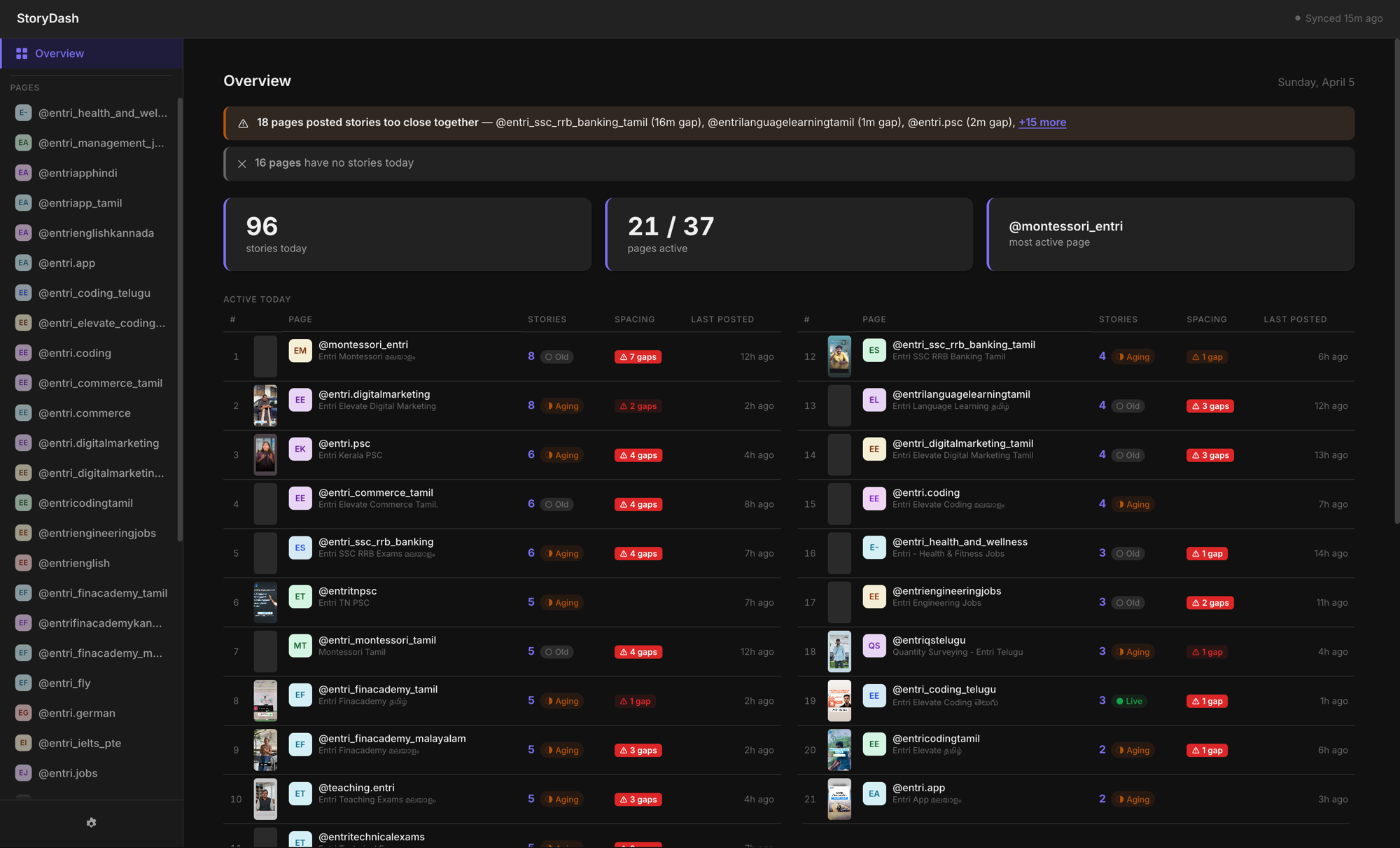
37 pages. 96 stories today. 21 pages active. The ones with nothing posted and the ones breaking spacing rules, right there, without opening Instagram once.
Catching story spacing violations
When I added the spacing check, I expected maybe two or three pages with issues.
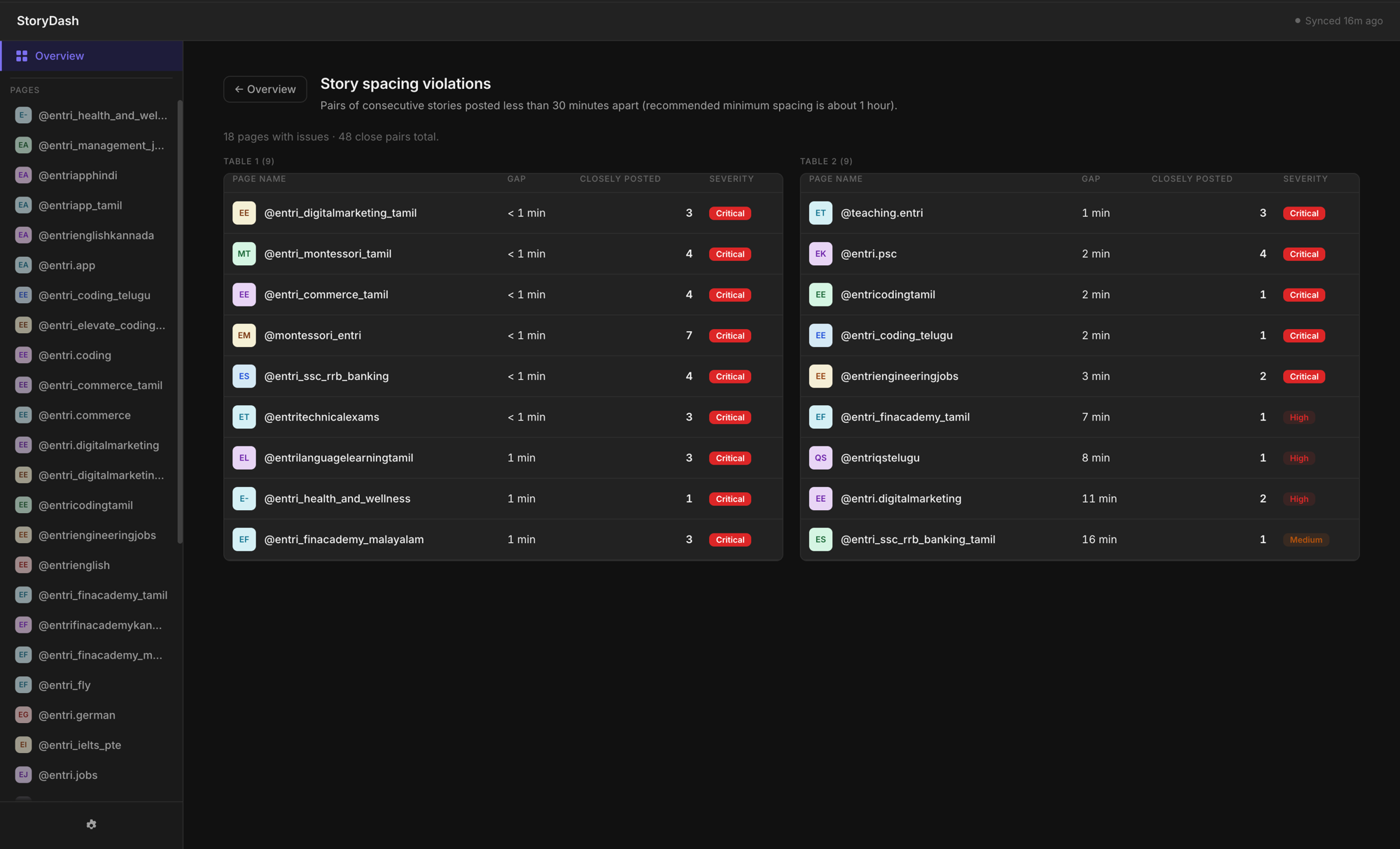
It was more than that. Multiple pages posting consecutive stories less than a minute apart. Some flagged critical. This had been happening every single day and we’d never caught it.
I showed this to the team. Nobody spoke for a second.
Drill into any page
Click any page, see the full day: thumbnails, timestamps, exactly where the gaps are too short.
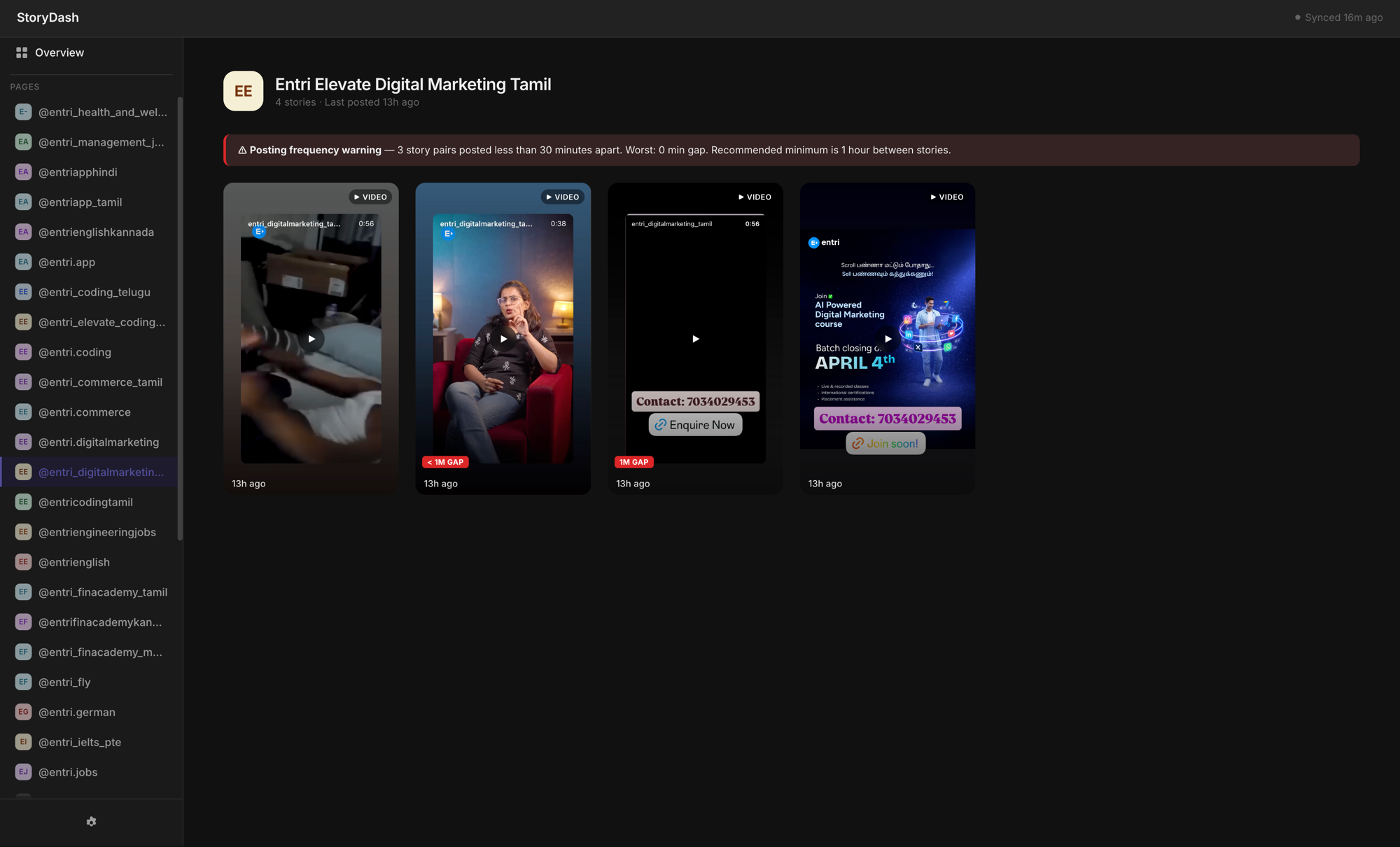
Three pairs of stories posted under 30 minutes apart. Worst gap: 0 minutes. The dashboard shows the exact violation and the recommended minimum, so the person managing that page knows what to fix, not just that something’s wrong.
The email that arrives without anyone asking
The dashboard solved the need to check. But I wanted to remove the need to check the dashboard too.
Hourly automated email. Every hour: pages that posted, pages that haven’t, which ones need attention.
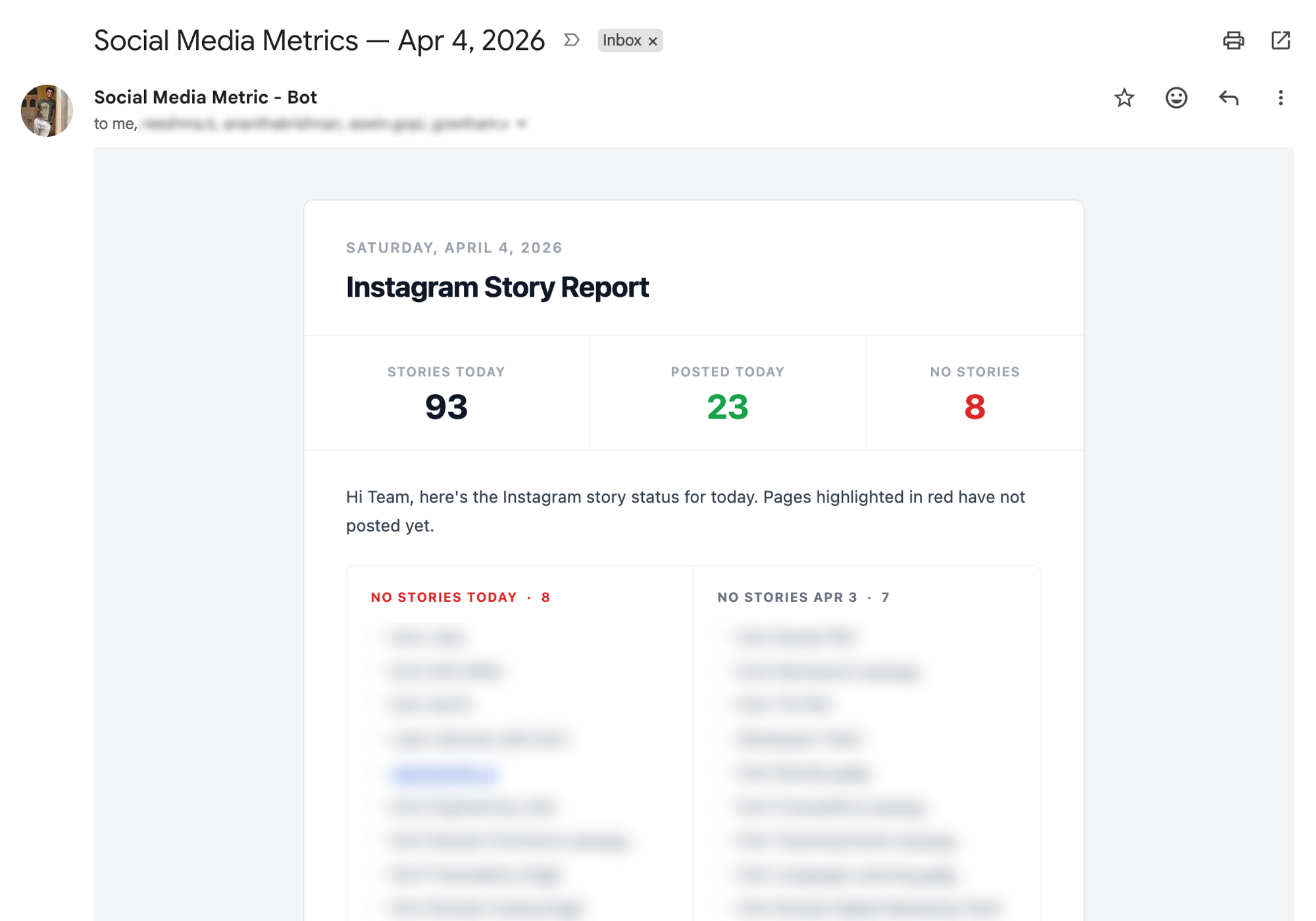
93 stories tracked. 23 pages posted. 8 with nothing yet, highlighted.
The information arrives. No one has to open anything.
How I built it with Claude Code
Built with Claude Code: dashboard, spacing logic, automated emails, all of it.
I manage content operations, not a dev team. No engineer involved, no ticket raised. Just a problem that was costing thirty minutes every morning, and a tool that stopped it.
Running in production.
Questions people ask about this
Does posting Instagram stories too close together hurt reach? Yes. Stories posted within minutes of each other are treated as a burst by the algorithm, not a cadence. Reach and views thin out. A minimum gap of 30 to 60 minutes between stories is the recommended safe window for consistent distribution.
How do you monitor Instagram story activity across multiple pages without opening the app? Build a dashboard that pulls story data and displays post times, gaps between stories, and pages with no activity in one view. Pair it with automated email reports so the information arrives on a schedule rather than requiring anyone to check manually.
Can you build internal social media tools without a developer? Yes. Claude Code lets you go from a clear problem description to a working internal tool without engineering resources. StoryDash was built this way: dashboard, backend logic, and automated reports, by someone managing content operations.
What is the best tool to manage multiple Instagram pages at once? Most third-party tools focus on scheduling, not monitoring. For teams managing 25+ pages, the gap is usually real-time visibility — knowing which pages have posted stories today, which haven’t, and whether story frequency is within safe limits. A custom internal dashboard like StoryDash solves this better than generic tools because it’s built around your specific pages and team workflow.
How do you track Instagram stories across multiple accounts? The reliable way is to pull story data via the Instagram Graph API into a single dashboard, showing all accounts in one view with timestamps and activity status. This removes the need to manually open each account. Pair it with automated reports sent on a schedule so the team always knows the status without checking.
What is Instagram story spacing and why does it matter? Story spacing is the time gap between consecutive stories on a single page. When stories are posted too close together — under 30 minutes — the algorithm treats it as a burst and reduces distribution. Each story gets fewer views than it would with proper spacing. At scale, across many pages, this happens constantly and silently unless you have a system that tracks and flags it.
How do you manage Instagram content operations at scale? Content operations at scale means replacing manual checks with systems that surface the right information automatically. For Instagram specifically: a monitoring dashboard that shows story activity across all pages at once, automated alerts for spacing violations, and scheduled email reports that deliver status updates without anyone needing to open a dashboard. The goal is to make the team’s default state informed, not reactive.